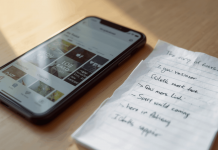
Grammarly’s free plan feels like enough until it stops you mid-edit on a piece that really matters. That timing is the problem. Most setup guides skip past it entirely.
Most reviews lead with feature breakdowns and plan pricing. Nobody talks about the setup habits that determine whether this tool improves your writing or quietly smooths it into something generic.
I think the biggest mistake writers make is treating Grammarly like a fact-checker or a style enforcer. It is neither. Misunderstanding that costs more editing time than the tool saves.
Run these checks before Grammarly earns a permanent spot in your process.
Grammarly Does One Thing Well. Know What That Thing Is.
Grammarly is a writing assistant, not a writing replacement. That distinction matters more than any feature comparison.
The tool catches grammar errors, typos, punctuation slips, and wordy sentences. It suggests simpler phrasing when a sentence carries too much weight. It nudges tone toward something more formal or more direct, depending on how you configure it.
What it does not do: verify facts, enforce your publication’s style guide, or catch structural problems. A paragraph can be grammatically clean and still be logically wrong. Grammarly will not flag that.

The problems it genuinely fixes for writers
For writers who publish frequently, Grammarly earns its keep on these specific problems:
- Basic grammar slips that make polished content look rushed
- Spelling typos that fast drafting always leaves behind
- Wordy sentences that bury the point under unnecessary weight
- Inconsistent tone across a long document or multi-author project
- Awkward phrasing that slows a reader without the writer ever noticing
That list covers the mechanical layer. Structure, argument, and accuracy stay entirely in your hands.
Where it quietly falls short
Grammarly is not context-aware in the way most writers assume. Some suggestions will shift your intended meaning if you accept them without reading carefully. A rewritten sentence can be cleaner by the tool’s standard and completely wrong for what you were trying to say.
It also cannot verify a single fact. Names, dates, statistics, and quotes all need separate confirmation. The suggestion may look confident. That confidence says nothing about whether the underlying claim is true.

What to Set Up Before Your First Real Draft
A bad setup produces bad suggestions from day one. Run through these basics before pasting anything important.
- Device and browser: Grammarly runs across supported browsers and has desktop and mobile apps, but the feature set is not identical across all three. Test the version you’ll use most before relying on it for live work.
- Dialect and tone settings: Set your preferred dialect, tone preference, and wordiness rules before testing on real work. Suggestions calibrate to these settings, and wrong defaults push you toward corrections that actively fight your voice.
- A throwaway test document: Run your first session on a sample draft, not a live project. This shows how the tool handles your specific style without risking anything that matters.
The full feature breakdown is available on Grammarly’s site if you want to compare tiers before deciding on a plan.
Also read: How to Use Two-Factor Authentication (2FA) Correctly
Free plan limits that catch writers off guard
The free version feels complete until it stops you mid-edit.
Advanced rewrites, tone controls, and deeper clarity suggestions sit behind a paywall. Some plans also limit how much text you can check in a given period, and app integrations are generally restricted to higher tiers.
Feature availability also varies by platform. The browser extension, desktop app, and mobile version do not always offer the same set of tools.
My take: the free plan handles grammar and spelling reliably. But for content writers producing long-form work regularly, the paid tier’s rewrite and tone features are where editing time drops most noticeably.
I would not commit to a paid plan without running the free version on real drafts for at least two weeks.
Check auto-renew settings before starting any trial. Trials convert to paid subscriptions faster than expected, and cancellation policies vary by plan.
Privacy Basics That Most Writing Tool Reviews Skip
What happens to your text after you submit it
This part matters most for freelancers handling client briefs, NDAs, or content they do not fully own. Grammarly processes the text you submit online. Account details and usage activity may be recorded.
Text you send for suggestions may be processed on external servers, stored, and retained for a defined period. Reading the privacy policy before pasting anything sensitive takes ten minutes and is worth it.
One practical rule that rarely appears in reviews: never paste passwords, client IDs, contract terms, or confidential information into Grammarly or any cloud-based writing tool.
The browser extension sees text across many sites and apps, which makes reviewing its permissions worth the extra step.
Freelancers working under non-disclosure agreements should confirm whether their contracts permit third-party tool access before using Grammarly on contracted work.
The Electronic Frontier Foundation’s guide to digital privacy covers broader context on what cloud-based tools can access and retain.
Enable two-factor authentication on your account and use a unique password. Limit extension permissions to what your workflow needs.
How Long Before You Feel Comfortable Using Grammarly
Most writers underestimate the time it takes to use this tool well. Grammarly is not complicated, but getting real value from it requires several weeks of deliberate practice.
| Stage | Time Required | What You’re Doing |
|---|---|---|
| First setup | 5-10 minutes | Install, sign in, test on a short paragraph |
| Basic learning | 30 minutes | Learn suggestion types, practice accepting and ignoring edits |
| Settings calibration | 1-2 hours | Test on real drafts, adjust dialect, tone, and wordiness rules |
| Routine building | First week | Use during final review, stop over-accepting suggestions |
| Consistent improvement | 2-4 weeks | Repeated mistakes drop, editing becomes faster |
At the 2-4 week mark, most writers notice the real payoff. The tool has seen enough of your writing patterns to surface the mistakes you make consistently.
Key features to test on a low-stakes draft first
Run a throwaway document through these before using Grammarly on anything that matters:
- Basic corrections: Spelling, grammar, and punctuation on a real paragraph
- Clarity suggestions: Tighter phrasing and simpler sentence construction
- Rewrite options: Alternative versions and whether they preserve your intended meaning
- Platform consistency: Whether the browser extension, desktop app, and mobile version offer the same tools
- Formatting survival: Whether headings, bullets, and spacing stay intact after edits
That last point catches a lot of writers off guard. Formatting can shift when you move text in and out of Grammarly, especially with longer documents.
The Habit That Makes Grammarly Less Useful, Not More
Most advice tells you to accept Grammarly’s suggestions freely and let the tool clean up your work. I think that approach is the fastest way to produce writing that sounds like everyone else’s.
Over-accepting suggestions is how distinctive writing voices disappear. Grammarly’s clarity and tone suggestions default to a professional register that works well for business email and corporate communications.
For content writing, that same register flattens the specific phrasing choices that make a writer’s work recognizable.
I think using Grammarly during final review only, rather than throughout the drafting process, produces better results for content writers.
The tool’s own learning curve confirms this: effective users shift to final-review use specifically by week one to stop over-accepting suggestions that change meaning. Most writers never make that shift.
Treat every suggestion as a question. Read it. Decide whether it serves what you meant. Reject anything that smooths out a deliberate stylistic choice. That habit turns Grammarly into a mechanical error catcher, which is the better role for it.
Questions People Ask About Grammarly
Q: Does the free version work well enough for professional content writing? The free version handles grammar, spelling, and punctuation reliably. Advanced tone controls, deeper rewrites, and long-form consistency checks are paid features. Test the free version on several real drafts before deciding whether upgrading fits your actual workflow.
Q: Can Grammarly replace a human editor? No. Grammarly catches surface-level errors and suggests clarity improvements. A human editor handles structure, argument, accuracy, and voice in ways the tool cannot. Use Grammarly as a first pass, not a final one.
Q: Is it safe to use Grammarly on client work covered by an NDA? Check your agreement before pasting anything. Grammarly processes submitted text online, which may conflict with NDAs that restrict sharing content with third parties. When uncertain, ask your client directly or review Grammarly’s data handling documentation before proceeding.
Q: Why does Grammarly keep suggesting changes I don’t want? Suggestions are built on general writing patterns, not your specific voice. Adjust your dialect, tone preference, and wordiness settings in your account. Add frequently flagged terms to your personal dictionary to reduce repeated false positives over time.
Q: Should I use Grammarly while drafting or only during revision? Final-review use produces better results for most content writers. Running it during drafting interrupts the thinking process and invites you to accept suggestions before you know what you’re trying to say.
Conclusion
Grammarly earns its place in a workflow only when writers understand where the tool’s judgment ends. Set up your dialect and tone preferences carefully before running it on any live draft.
Test on low-stakes writing first, and treat every rewrite suggestion as a question rather than a correction. The writers who get the most from Grammarly are the ones who know exactly what to reject.