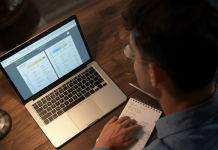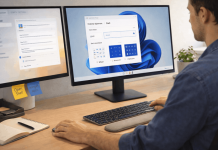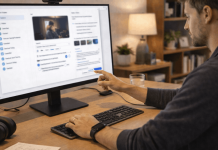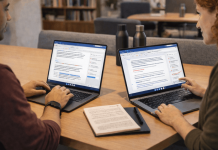
Microsoft 365 feels familiar across devices, but the experience changes once work begins. A phone is useful for checking files quickly, while a desktop is stronger for editing, formatting, and complex tasks.
This guide explains Microsoft 365 features for users who want to understand how this software works across devices without assuming every screen behaves the same.
It is useful for students, remote workers, small teams, and anyone switching between Word, Excel, PowerPoint, Outlook, and OneDrive.
Cross-Device Use Starts With the Task
Moving between devices works best when you match the tool to the job. Mobile apps are convenient for quick checks, comments, light edits, and travel situations.
Desktop apps handle heavier work because they offer more space, stronger controls, and fuller menus. This device workflow matters because the same document can feel simple on a laptop and cramped on a phone.
Before starting, ask whether you are reviewing, editing, designing, analyzing, or organizing. That choice helps avoid frustration before the app even opens.
Mobile Is Best for Quick Access
The mobile version is strongest when speed matters more than depth. You can open a Word file, reply to an Outlook message, view a PowerPoint deck, or upload a receipt to OneDrive without returning to a computer.
These mobile tasks fit short moments between classes, meetings, trips, or client calls. The limitation appears when small screens make menus harder to reach or large files slower to manage.
Mobile works well as a companion, but it should not be treated as a complete replacement for desktop work.
Word Works Differently on Each Screen
Microsoft Word on desktop gives users the fuller editing space. It supports advanced formatting, layout controls, styles, references, comments, Track Changes, and longer document review with less friction.
On mobile, Word editing is more practical for reading, checking comments, fixing short paragraphs, or making quick corrections.
The smaller interface keeps the app usable, but it hides or simplifies tools desktop users rely on. If you are writing a long report, formatting a resume, or preparing a polished document, desktop remains the safer place to finish the job.
Track Changes Needs More Room
Track Changes and comments are available on mobile, but they are easier to manage on a larger screen. Reviewing many edits on a phone can feel crowded when several people comment on the same document.
A desktop gives better visibility for document review, side panels, formatting marks, and comparison work. Mobile can help you approve a small change or answer a note quickly. For serious editing, use mobile for follow-up and desktop for final decisions.
Also Read: Software Explained for Beginners
Excel Shows the Biggest Gap
Excel is where the mobile and desktop gap becomes most obvious. Desktop Excel handles pivot tables, larger workbooks, advanced formulas, charts, macros, and detailed data cleanup with more control.
Mobile Excel is useful for checking numbers, entering values, or confirming a simple formula. Serious spreadsheet work becomes harder on a phone because rows, columns, tabs, and formulas need space.
If a workbook affects budgets, reports, inventory, or client data, avoid making major changes on a small screen unless the task is very simple.
Large Files Belong on Desktop
Large spreadsheets can load slowly on mobile, especially when they include charts, multiple tabs, or complex calculations. Even when the file opens, navigation can become tiring because zooming and scrolling interrupt work.
A desktop setup gives data control through keyboard shortcuts, wider views, and better multitasking.
This matters for users who compare sheets, clean data, or build reports. Mobile is useful for checking information, but desktop is better when accuracy depends on seeing the full structure.
PowerPoint Is Easier to Present Than Design on Mobile
PowerPoint mobile helps when you need to view slides, fix a typo, rehearse briefly, or present from a tablet. It is not as comfortable for building a full deck from scratch.
Desktop PowerPoint gives stronger control over layouts, animations, transitions, embedded media, speaker notes, and slide order.
These presentation tools need room because design decisions often depend on spacing, alignment, and visual balance. A phone can save a presentation in an emergency, but a desktop helps prevent that emergency.
Design Details Need a Larger Canvas
Small screen editing can make a slide look correct until you open it on a projector or laptop. Text boxes may shift, images may feel crowded, and animations may not behave as expected.
A larger design canvas makes it easier to check spacing, hierarchy, and readability. Mobile is still useful for reviewing the flow of slides or making a quick wording change. For client decks, school reports, or business presentations, do the final pass on desktop.
Outlook and OneDrive Keep Work Moving
Outlook and OneDrive often feel most useful on mobile. Outlook lets you reply, search recent messages, check calendars, and stay updated away from your desk. OneDrive lets you preview, share, and upload files from almost anywhere.
These sync tools keep work moving, but they still have limits. Advanced inbox rules, folder cleanup, add-ins, large file control, and detailed sharing settings are easier on desktop. Mobile keeps you connected; desktop helps you organize the system behind that connection.
Offline Access Requires Planning
Offline access can be helpful during travel, weak Wi-Fi, or long commutes, but it does not always happen automatically on mobile. Users should mark important OneDrive files for offline use early.
This offline planning prevents panic when a document will not load during a meeting or trip. Desktop devices usually offer stronger local file control through synced folders. On mobile, it is safer to prepare the files in advance instead of assuming they will be ready.
Security and Licensing Affect Daily Use
Microsoft 365 access depends on account settings, device limits, and subscription type. Personal, Family, and Business plans offer different control, storage, admin tools, and collaboration features.
These account rules matter because a feature may be missing due to the plan, not the device. Business users should also consider permissions, managed devices, and sign-in requirements.
Two-factor authentication adds protection but can interrupt work if backup login methods are not ready. Checking account details early prevents confusion later.
Use Each Device for Its Strongest Job
Microsoft 365 works best when mobile and desktop are treated as partners. Use mobile for reading, quick replies, simple edits, file previews, calendar checks, and urgent uploads.
Use desktop for heavy writing, spreadsheet analysis, presentation design, inbox management, automation, and final review.
This practical setup keeps each device in the role it handles best. The smartest approach is knowing when switching screens will save time, reduce errors, and make work smoother.