Most people name their first Google Docs file “Untitled Document” and never fix it. Three months later, they have forty of them and cannot find the one that matters.
The tool is not the problem. The sequence is. Most tutorials hand you a feature list and skip telling you the order those features actually belong in.
This guide uses Google Docs because it is free, browser-based, and built to handle everyday writing tasks without extra installs, licenses, or subscriptions.
Google Docs tutorial content fills the internet. Most of it is a feature walkthrough. This is a workflow guide. Those are two different things.
Start With a Blank Document, Not a Template
Every beginner guide disagrees with me here. Every one of them says grab a template and fill it in.
My take on Google Docs templates specifically: starting with one before you understand document structure teaches you to fill boxes, not to think. And when the template does not fit your situation, you are left with no mental model for why.
A blank document forces real decisions. What is this file? What goes at the top? How do sections connect? Those questions sound tedious until you realize templates only make sense once you can answer them without prompting.
Start blank. Name the file immediately. “Project Notes – May 2026” beats “Untitled Document 7” every single time. Add one purpose sentence at the top so future you understands the file in three seconds.
When Templates Start Paying Off
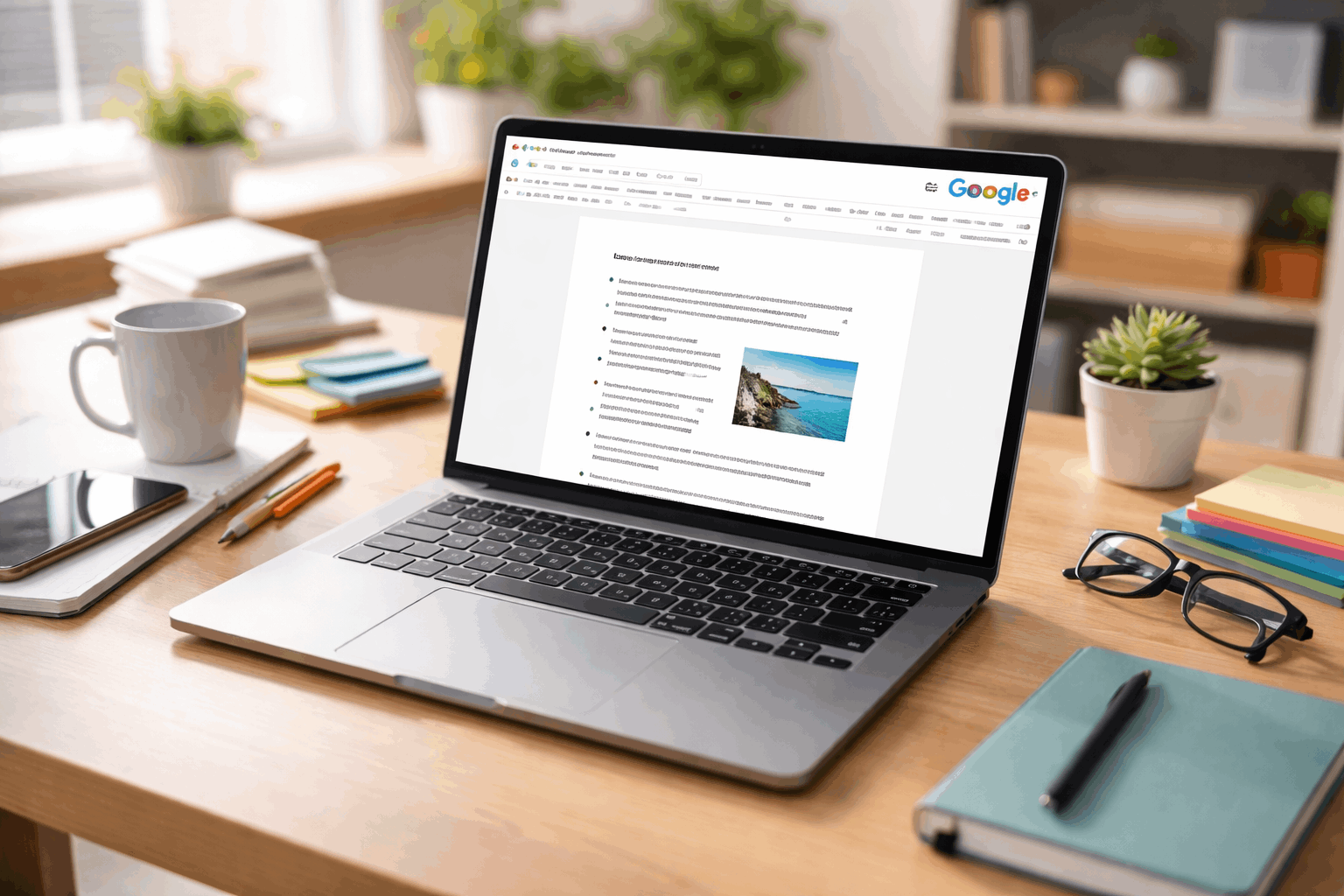
Templates become genuinely useful after building three or four documents from scratch. At that point, the structure feels familiar, and the template stops being a crutch.
Pick one template style, resume or meeting notes or project report, and reuse it consistently.
Save your cleanest from-scratch document as a personal template by making a clean copy before adding content. That custom version will serve your actual workflow far better than any pre-built option.
The Sequence That Keeps Documents Looking Clean
Most formatting disasters come from one habit: formatting while writing.
People type a heading, manually change the font size, bold it, adjust the spacing, and then keep writing. Thirty minutes later, nothing matches. The document looks cobbled together because it was.
Draft the whole thing first. Get every idea on the page without touching font sizes or spacing. Formatting belongs in the second pass, not the first.
Why Built-In Heading Styles Are Worth Learning
Once the draft exists, go back and apply headings using the Heading 1 and Heading 2 styles in the dropdown menu. Highlight a line, pick the style, and that is the entire process.
Headings do three things at once. They create visual hierarchy for readers. They build a clickable document outline in the left sidebar for navigation. And they make exports to PDF and Word significantly more reliable than manual formatting ever will.
The alternative is resizing fonts and bolding section titles by hand. That approach breaks the moment you copy, paste, or export anything.
Also read: How to Let Someone Into Your Computer Without Handing Them the Keys
The Paint-Format Tool Almost Nobody Mentions
After setting your body text to one font and size, use the paint-format tool (the small roller icon in the toolbar) to copy that style to other sections instantly.
This tool cuts formatting cleanup time dramatically on any document longer than three sections. Most basic guides skip it entirely. Find it once, and it becomes part of every document you build afterward.
Sharing Without Creating a Mess
Sharing is where most Google Docs workflows fall apart. People share first and set permissions as an afterthought, or never.
Decide the goal before hitting share. Is this person reading, commenting, or editing? Each answer maps to a specific permission level:
- Viewer: someone who only needs to read the document
- Commenter: someone giving feedback without touching your text
- Editor: a trusted collaborator who knows the document structure
Set permissions at the moment you share. If a document contains personal or sensitive information, turn off “Anyone with the link” entirely and share to specific email addresses instead.
Comments Beat Separate Email Threads Every Time
Ask collaborators to leave comments directly on the relevant line in the document. Not in a side email. Not in a chat thread that gets buried.
All feedback stays attached to the content it references. Resolve comments when changes are applied. The document stays clean and the revision history stays readable.
A short instruction line at the top helps: “Please review sections 2 and 3 and comment directly on the text.” That one line cuts unnecessary back-and-forth on documents with multiple reviewers.
Getting Files Out the Door Cleanly
A Google Docs share link works for collaboration. It does not work for a resume sent to a hiring manager or a proposal delivered to a client running Microsoft Office.
Different deliverables need different formats. A quick check on the exported file takes 60 seconds and catches broken spacing, missing headings, and blank trailing pages before they become someone else’s problem.
PDF vs Word: Choosing the Right Export
| Situation | Best Format |
|---|---|
| Resume or job application | |
| Client proposal or report | |
| File the recipient must edit | Word (.docx) |
| Document for printing | |
| Back-and-forth with a Microsoft Office user | Word (.docx) |
Export as PDF when the layout must look identical on every screen and every printer. Export as Word when the recipient needs to edit in Microsoft Office and return the file.
Open the exported document and scan headings, spacing, and page breaks before sending anything out.
Version History Is the Feature to Learn on Day One
Most beginners discover version history after something breaks. That order is backwards.
Open it now: File, then “Version history,” then “See version history.” Every saved state is listed there, timestamped and attributed to whoever made the change.
Name your important versions. “Final Draft,” “Sent to Client,” and “Before Major Edits” act as checkpoints you can restore instantly.
I would prioritize version history in Google Docs above headings, above sharing settings, and above every other feature covered here. Losing work once is enough to understand why that order matters.
Features Worth Adding Once the Basics Click
These are not advanced. They are under-explained in most standard guides, which is the only reason most people miss them.
Voice typing captures rough ideas faster than most people can type. Speak in short sentences, pause between thoughts, and do one editing pass to clean up punctuation afterward.
It sounds gimmicky until typing feels slow and speaking a rough draft turns out faster than you expected.
Offline mode exists for exactly the moment you need it most and have not set it up yet. Enable it before travel.
Go to Google Drive settings and toggle offline access on. Documents load and save locally, and changes sync automatically when the connection returns.
For file organization, create folders in Google Drive before accumulating enough untitled documents to lose track. Three folders handle most situations:
- A folder for school or study documents
- A folder for work files and ongoing projects
- A folder for personal drafts and reference materials
Use a naming pattern like “Topic – Date” to make search fast and reliable. “Resume – January 2026” is findable. “My Resume Final v3 ACTUAL FINAL” is a productivity trap.
Organize Before the Clutter Builds
The Google Docs home screen becomes a useful tool when it is clean. When it is cluttered with forty unnamed files, finding anything takes longer than starting from scratch.
That gap between organized and chaotic closes in under ten minutes. Create the folders once. Use the naming pattern every time. The structure pays forward into every document you build from here.
Questions People Ask About Google Docs
Q: Does Google Docs work without the internet? Offline mode handles this if you enable it before you actually need it. Go to Google Drive settings and toggle offline access on. Changes sync the moment your connection returns automatically.
Q: Can I use Google Docs if the other person uses Microsoft Word? Export as a Word file using File, then Download, then Microsoft Word (.docx). Formatting transfers reasonably well for most documents, though complex layouts can shift slightly. Open the exported file and check it before sending.
Q: Is Google Docs free to use? Google Docs is free for personal use with a standard Google account. No cost to create, share, or export documents. Google Workspace plans for teams add admin controls and more storage, but the core writing tool costs nothing.
Q: What happens when two people edit at the same time? Google Docs handles simultaneous editing in real time, showing each editor as a color-coded cursor on screen. Changes merge automatically, which is exactly why naming your important versions in version history matters more than most people realize.
Q: How do I remove someone’s editing access after sharing? Go to share settings, find the person’s name or email, and change their permission from Editor to Viewer or Commenter. Permission changes take effect immediately with no confirmation step required.
Conclusion
A clean Google Docs workflow practiced consistently produces better results than a dozen half-learned features scattered across tools. Most everyday writing tasks fit neatly into a write-format-share-export sequence that takes only minutes to learn.
Pick one section from this guide and apply it to a document you are already working on this week. The habit of clean structure and consistent formatting builds faster than any feature tutorial can teach.